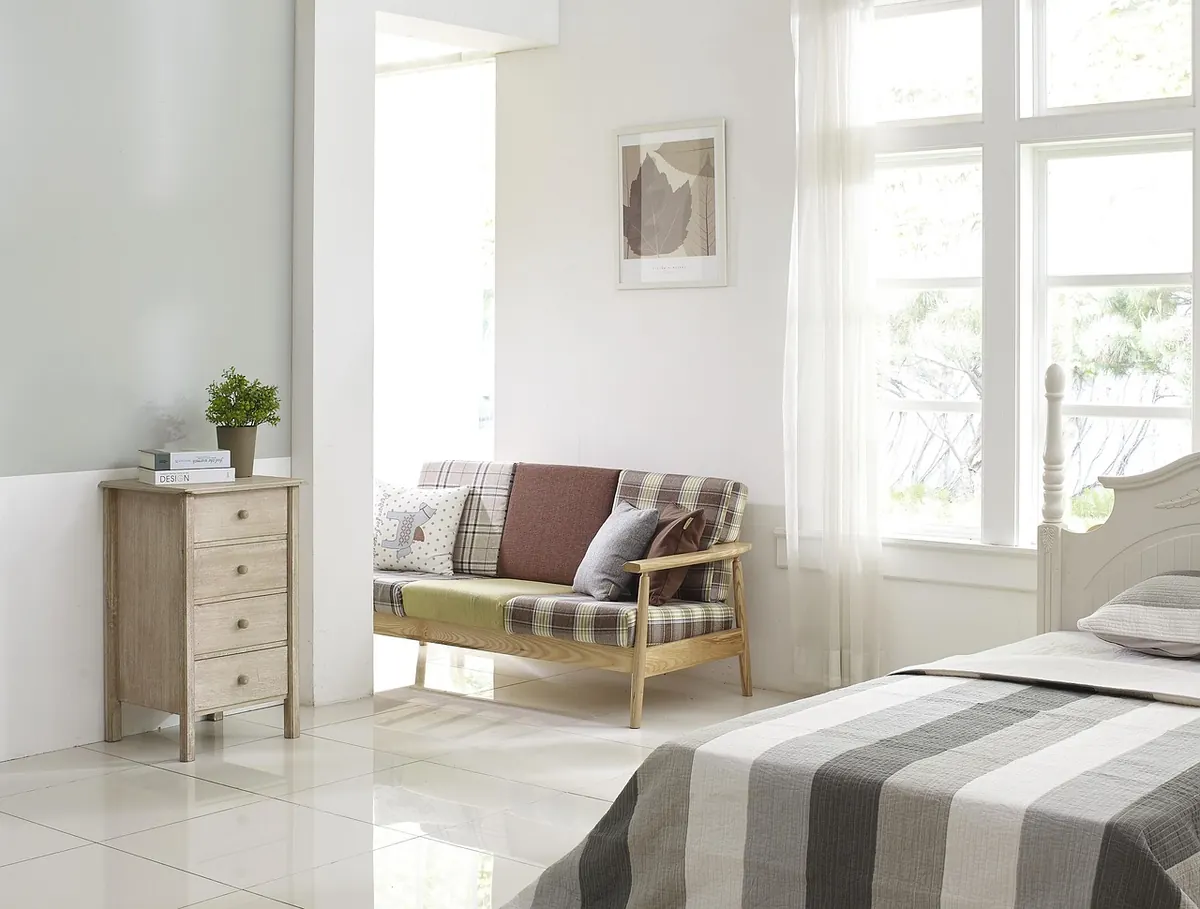
There is a particular moment on a November evening when a room stops feeling like somewhere you want to be. The overhead light goes on, every corner sharpens at once, and the sofa suddenly looks like furniture in a waiting room. Nothing in the room has changed. Only the light has.
Warm, layered lighting is the simplest way to change how a home feels after dark, and it has very little to do with buying more things. It is about spreading light around at low height, in small pools, in a colour that flatters skin, wood and wool instead of flattening them. Get the basics right and a modest living room can feel like the corner table of a very good pub.
Why one bright light rarely works
Light from a single source arrives from one direction. It casts one set of shadows, creates hard edges where the walls meet the ceiling, and leaves the far corners of the room in a darkness that feels like an absence rather than a mood. Your eyes have to work harder, too, because the contrast between the lit page in front of you and the gloom behind it is so wide.
Several small lights do the opposite. They overlap, filling each other's shadows, and they sit low enough that the brightest part of the room is roughly where your hands and face are. The result is a room that reads as soft rather than dim, and you can read a book in it without turning the whole space into an operating theatre.
The three layers to aim for
Professionals talk about layering light in three jobs. You do not need a plan drawn on graph paper, but it helps to know which job each lamp is doing.
- Background light. A gentle wash that stops the corners going black. A floor lamp with a linen shade, a pair of small lamps on a sideboard, or a warm wall light will do this.
- Task light. Bright enough for reading, knitting, chopping vegetables or finding the remote. This is the lamp beside your chair or on the kitchen worktop, and it can be the brightest thing in the room.
- Accent light. The small, decorative glints: fairy lights in a jar, a little lamp on a bookshelf, a candle or two. They add depth and, frankly, charm, without lighting anything in particular.
Two of the three layers is a good evening. All three is a room people drift into and stay in.
Choosing and placing your lamps
Floor lamps
A floor lamp is your workhorse. Put it in a corner behind or beside the sofa so the light comes over your shoulder rather than into your eyes, and check the height: with a shade that sits below eye level when you are seated, the bulb can be visible from the sofa, which is uncomfortable. If you read a lot, an arc or angled reading lamp that throws light downwards is worth the space.
Table lamps
Table lamps are the easiest layer to add, because most of us already own one that is doing nothing useful. A pair either side of the sofa balances a room instantly; a single one on a windowsill or a chest of drawers fills a dead corner. Fabric or paper shades give a soft, even glow. Opaque or metal shades throw light up and down in two strong beams, which suits a corner but not a bedside table.
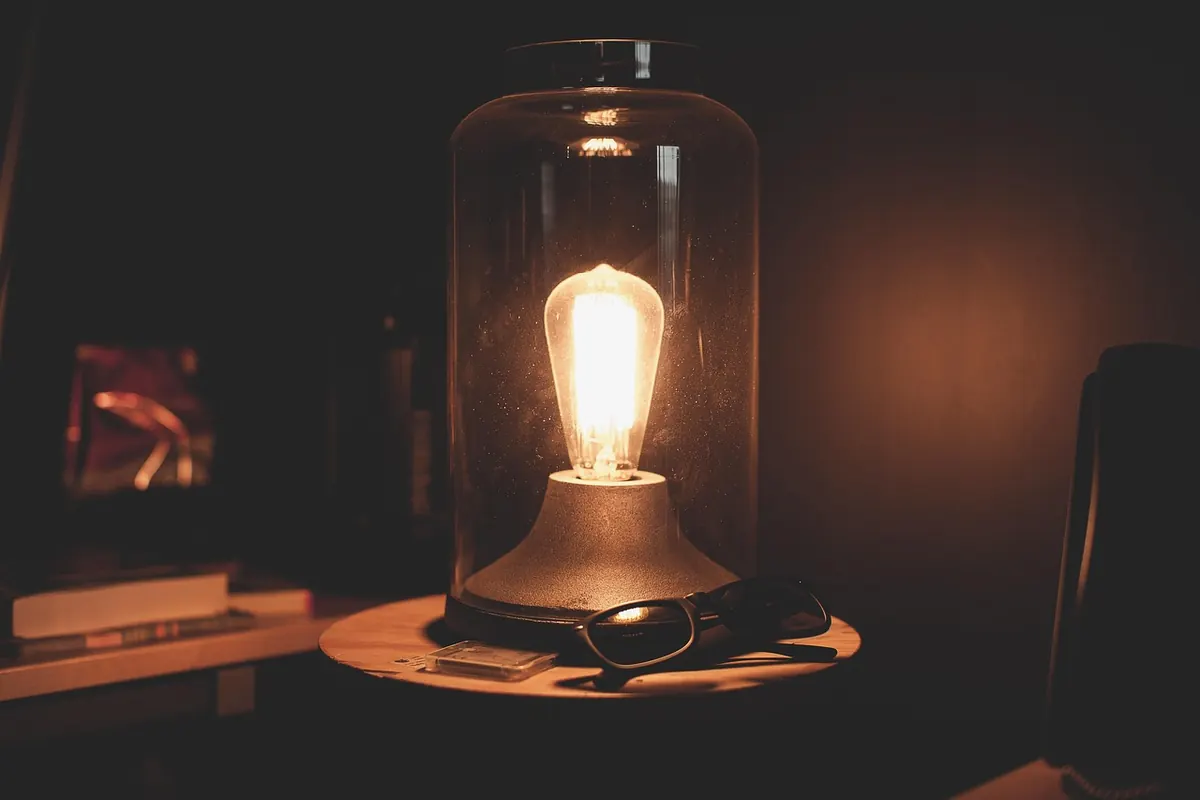
One rule worth keeping: never let the bare bulb catch your eye from where you normally sit. Move the lamp a few centimetres, turn the shade, or swap it for a deeper one, and the whole room improves.
Fairy lights, used properly
Fairy lights are not just for December. Choose warm white rather than cool white, ideally on a copper or clear wire so they disappear into whatever they are draped over, and buy the kind with a timer so they switch themselves off. Battery versions avoid trailing cables altogether.
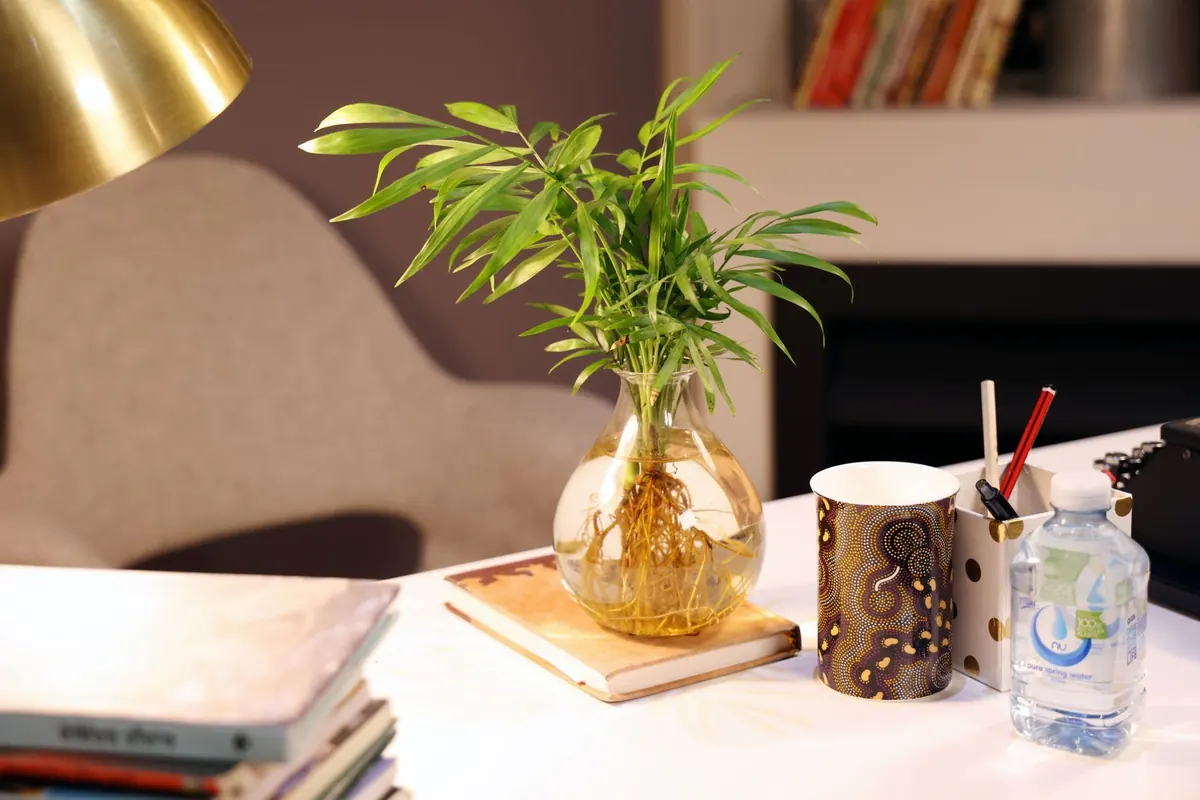
The trick is to make them look deliberate rather than flung. Wind a strand loosely through a glass jar or vase with a few dried stems, run one along the top of a picture rail, or tuck a short set behind a headboard for a low glow at bedtime. Keep them clear of curtains and soft furnishings that might sit against a warm bulb for hours, and do not chain several sets onto one extension lead; use a proper multi-way adaptor and check the plugs stay cool.
Bulbs, warmth and the details that matter
Colour temperature is the difference between a room that feels like a pub and one that feels like a car park. Look for warm white bulbs, generally marked around 2700K, or extra warm bulbs closer to 2200K for bedside and fairy lights. Anything described as cool white or daylight will fight everything else you are trying to do in a living room.
A few practical points:
- Check the maximum wattage printed on the lamp holder and stay at or below it.
- Buy dimmable bulbs if you plan to dim, and check your switch or plug dimmer is compatible; a non-dimmable bulb will buzz or flicker.
- Use a plug-in dimmer or a smart plug with a timer so lights come on before you get home, rather than fumbling for switches in the dark.
- Replace every cool white bulb in the main living space over time. You do not have to do it all at once.
A five-minute evening routine
If the whole idea feels like a lot of fiddling, try this order for a week.
- Switch the ceiling light off first. Almost everything else improves once you do.
- Turn on the corner floor lamp for background light.
- Add the table lamp beside your seat for reading.
- Finish with fairy lights or a small accent lamp, then dim everything by a notch or two.
Once you have done it a few times, the sequence becomes automatic and you will notice immediately when a room is lit badly.
Start with one corner tonight
You do not need to rewire your home or replace your furniture. Pick the corner you actually sit in, put one warm bulb in one lamp, switch off the overhead light, and leave it like that for an evening. If the room feels calmer, that is the layering working.
From there, add a second lamp where the shadows are heaviest, and a small strand of fairy lights where you want the eye to rest. Keep cables tucked along skirting boards and out of walkways, and check periodically that plugs and leads are not warm or frayed. If you live with anyone who trips over things in the dark, a plug-in night light on the landing is a sensible addition rather than a fussy one.
Cosy is not a style you buy all at once. It is a set of small, warm pools of light, arranged around the way you actually live after dark.
Photo: Foundry / Pixabay