There's a point in the evening when the overhead light goes off, the lamps come on, and the room seems to exhale. Scent does a lot of that work. A candle and a reed diffuser both promise a better-smelling home, but they deliver it in very different ways. One is a small ritual you perform; the other is a quiet presence you forget about until you notice it again. Neither is superior — they simply suit different rooms, habits and budgets.
How Each One Actually Works
A scented candle releases fragrance when the wax melts. Heat from the flame warms the pool of liquid wax, and the fragrance oils in it evaporate into the air. That means scent arrives with warmth, and usually quite quickly. A candle can change the mood of a room within ten minutes of lighting it.
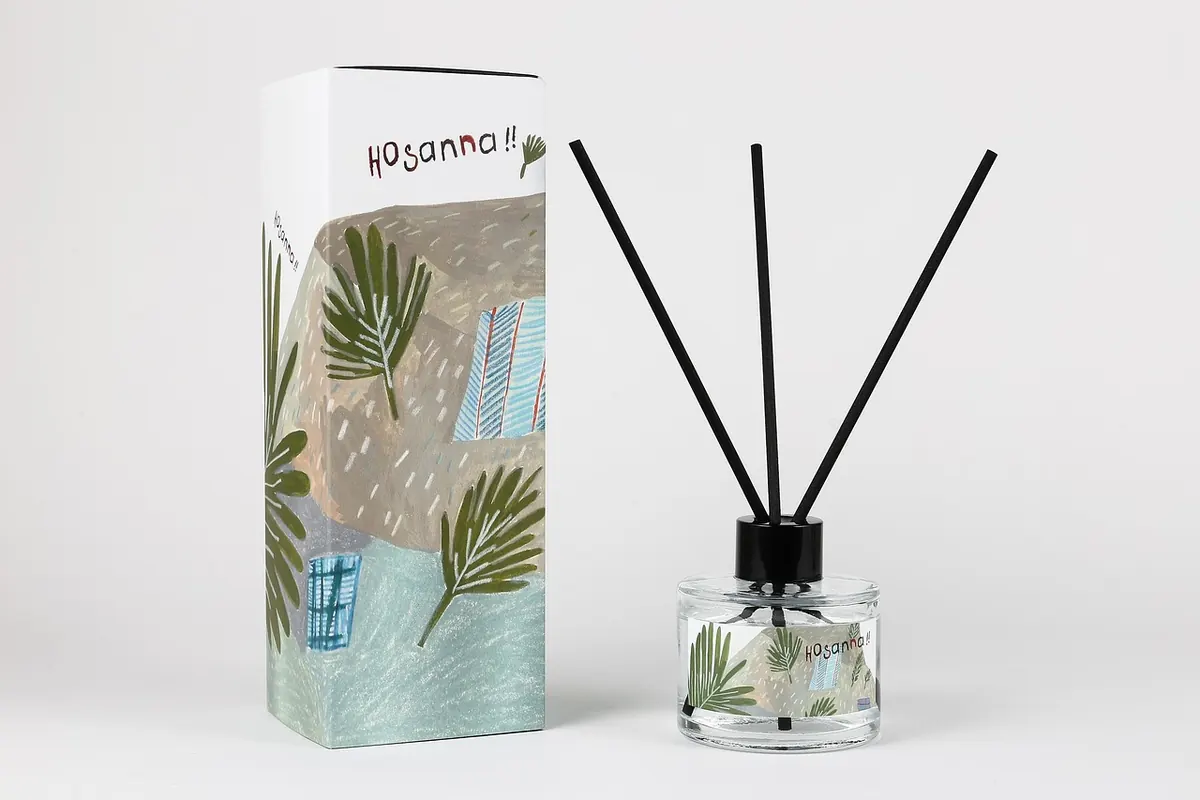
A reed diffuser does the opposite. Fragrance oil creeps up the reeds by capillary action and evaporates from the exposed surface at room temperature. There is no heat, no flame and no switch. Scent is released constantly, in a gentle trickle, for as long as the oil lasts.
Wax choice matters too. Soy, rapeseed and coconut blends tend to burn cooler and more slowly than paraffin, which many people find gentler, though paraffin and heavily fragranced blends often throw scent harder. Wick size, jar shape and how well you trim the wick all affect how cleanly a candle burns.
Scent Throw: Strength, Reach and Room Size
Scent throw is the term for how far and how strongly a fragrance travels. Candles generally win on this, particularly in an enclosed room. A good candle can scent a living room within half an hour, and the warmth of the flame seems to carry richer scents — amber, woodsmoke, vanilla, spiced orange — better than cold air does.
Reed diffusers are subtler by design. They work best in small or medium spaces with a little airflow: hallways, bathrooms, box bedrooms, the corner of a study. Put one in a large open-plan room and it will often disappear entirely, especially in winter when the windows are shut and the air is still.
A note on nose blindness
Your nose adapts to constant scent surprisingly fast. After twenty minutes in a room with a diffuser you may stop registering it, while a guest walking through the front door notices it immediately. Flipping the reeds refreshes the surface and lifts the scent for a while. If you want a room to smell strongly for one specific hour, a candle is the more reliable tool.
Safety in a Cosy Room
This is where the two options part company most sharply. A diffuser is largely forgettable; a candle involves an open flame.
Candle safety
- Never leave a lit candle unattended, and put it out before you leave the room or go to bed.
- Keep candles at least 10cm apart and well away from curtains, cushions, books, dried flowers and anything else that could catch.
- Trim the wick to about 5mm before each burn. Long, unkempt wicks cause flickering, soot and a smoky smell.
- Burn for two to four hours at a time, no longer. Long burns can overheat the glass and cause the wax to tunnel.
- Keep them out of reach of children and pets, and away from draughts that push the flame sideways.
- Use a snuffer or wick dipper rather than blowing the candle out — less smoke, less mess.
Diffuser safety
Reed diffusers carry their own, quieter risks. The oil is a spill waiting to happen: it can mark polished wood, lift varnish and stain fabric, so stand the bottle on a coaster or a small dish. Keep it above the reach of children and pets, and never decant it into a bottle that could be mistaken for something else.
Fragrance oils are concentrated, and some are not suitable around cats, dogs, birds or reptiles. If you have pets, are pregnant, or live with asthma or another respiratory condition, check with your vet or GP before using strong or continuous fragrance at home.
The Real Cost of an Evening's Scent
Candles feel cheap at the till and expensive over time. A large jar candle might burn for around forty hours, but light it every evening for two hours and you'll work through it in under a month. Replacing it starts to add up, and thinly fragranced candles need to be burned longer to make an impression, which shortens their life further.
Diffusers are the reverse. A decent 100ml bottle usually gives weeks to a couple of months in a small room, depending on warmth, airflow and how often you flip the reeds, and there is nothing to replace each evening. The trade-off is that you cannot turn the scent up when you want it — and refills are still a recurring cost.
Maintenance: The Faff Factor
Candles ask a little of you every time. The routine is short but regular:
- Trim the wick before each burn.
- On the first burn, let the wax melt all the way to the edge of the jar — usually two to three hours — to set an even memory.
- Keep an eye on it while lit, and snuff it out before you leave the room.
- Clear out the last centimetre of wax and the wick stub before you recycle the jar.
Diffusers ask almost nothing, with one exception: the reeds clog. Over several weeks they become saturated and stop drawing oil upwards, so the scent fades even though the bottle still looks full. Flip them weekly for a lift, and replace the reeds every couple of months. Ceramic or fibre reeds often throw a little more strongly than plain rattan.
Which One to Choose
- Choose a candle if you want atmosphere as much as scent: the flicker, the ritual of lighting, and a fragrance that fills one room for an evening.
- Choose a diffuser if you want a background hum of scent in a hallway, bathroom or small bedroom, and you'd rather not think about it again.
- Choose both if you can only be bothered once: diffuser for the entrance, candle for wherever you actually sit.
One more option worth knowing about is a candle warmer or lamp warmer, which melts the wax with a bulb instead of a flame. You get the candle's scent more consistently, with no soot and no open fire — though there is nothing to watch.
A Simple Evening Setup
Pick one scent family for the evening and stay with it — citrus or herbs in summer, amber, wood and spice in winter — so the house smells deliberate rather than confused. Put the diffuser somewhere you pass through rather than somewhere you sit. Light the candle when you settle down, keep it within sight, and snuff it out when you head upstairs.
When choosing between scents, smell the cold candle first but trust the warm version; cold wax and lit wax can smell quite different. A diffuser, by contrast, smells much as it will smell once the reeds go in — what you sniff in the bottle is roughly what you'll get.
Photo: yhahn / Pixabay